Umrah guide · For pilgrims
How to perform Umrah, step by step
Umrah has four rites: Ihram, Tawaf, Sa'i and cutting the hair. This guide walks through each one in the order you will do them, with diagrams of the Tawaf and the Sa'i, the duas in Arabic, and the mistakes pilgrims make most often.
Labbyk editorial team 9 min read
On this page
Umrah is the lesser pilgrimage to Makkah. Unlike Hajj it can be performed at any time of the year, and the rites themselves usually take three to five hours, depending on the crowds. There are four of them, always in this order:
- Step 1IhramEnter it at the Miqat
- Step 2TawafSeven rounds of the Kaaba
- Step 3Sa'iSeven laps, Safa to Marwa
- Step 4Halq or TaqsirShave or shorten the hair
Before you travel
- Visa: you need an Umrah visa (usually arranged by your agency) or another Saudi visa that allows Umrah. Your agency will tell you which documents it needs and how long it takes.
- Vaccines: Saudi Arabia asks Umrah pilgrims for a meningitis (ACWY) vaccination certificate. Health rules change, so check the current list with your agency before you travel.
- The Nusuk app: the official app from the Saudi Ministry of Hajj and Umrah. You use it to book a time to pray in the Rawdah in Madinah, among other permits.
- Learn the duas you want to say. There is no fixed dua for each round of Tawaf or each lap of Sa'i. You may pray in your own language, so prepare a list of what you want to ask for, for yourself and for the people who asked you to pray for them.
Step 1: Enter Ihram at the Miqat
Ihram is the sacred state you enter for Umrah, and also the name of the clothes men wear in it. You must enter Ihram before you cross the Miqat, the boundary around Makkah. Pilgrims flying from India cross it in the air, so most put the clothes on before boarding — see our guide to the Miqat and Ihram for pilgrims from India.
Prepare your body
Before putting on Ihram it is sunnah to take a full bath (ghusl), trim your nails and remove unwanted hair. Men may put perfume on their body — not on the Ihram cloth — before making the intention.
What to wear
- Men wear two plain, unstitched white sheets: one wrapped around the waist (izar) and one over the shoulders (rida). The head stays uncovered, and footwear must leave the top of the foot and the ankle bones open.
- Women wear their normal modest clothing in any colour, covering everything except the face and hands. In Ihram a woman does not wear a niqab or gloves.
Make the intention and say the Talbiyah
At or before the Miqat, make the intention (niyyah) for Umrah in your heart and say “Labbayk Allahumma ‘Umrah” — “Here I am, O Allah, for Umrah.” From this moment you are in Ihram. Then begin the Talbiyah: men say it aloud, women say it quietly. Keep repeating it on the way to Makkah until you begin the Tawaf.
The Talbiyah
لَبَّيْكَ اللَّهُمَّ لَبَّيْكَ، لَبَّيْكَ لَا شَرِيكَ لَكَ لَبَّيْكَ، إِنَّ الْحَمْدَ وَالنِّعْمَةَ لَكَ وَالْمُلْكَ، لَا شَرِيكَ لَكَ
Labbayk Allahumma labbayk, labbayk la sharika laka labbayk. Innal-hamda wan-ni‘mata laka wal-mulk, la sharika lak.
What you can and can't do in Ihram
Not allowed in Ihram
- Cutting or removing hair or nails
- Using perfume, or scented soap and creams
- Men: covering the head, or wearing stitched clothes shaped to the body
- Women: covering the face with a niqab, or wearing gloves
- Marital relations, and making or attending a marriage contract
- Hunting, and arguing or using bad language
Allowed in Ihram
- Showering with unscented soap
- Changing into a clean set of Ihram
- A belt or money pouch, a watch and glasses
- An umbrella, and sitting in a bus or under a roof
- Taking your medicines
- Brushing your teeth
Step 2: Tawaf — seven rounds of the Kaaba
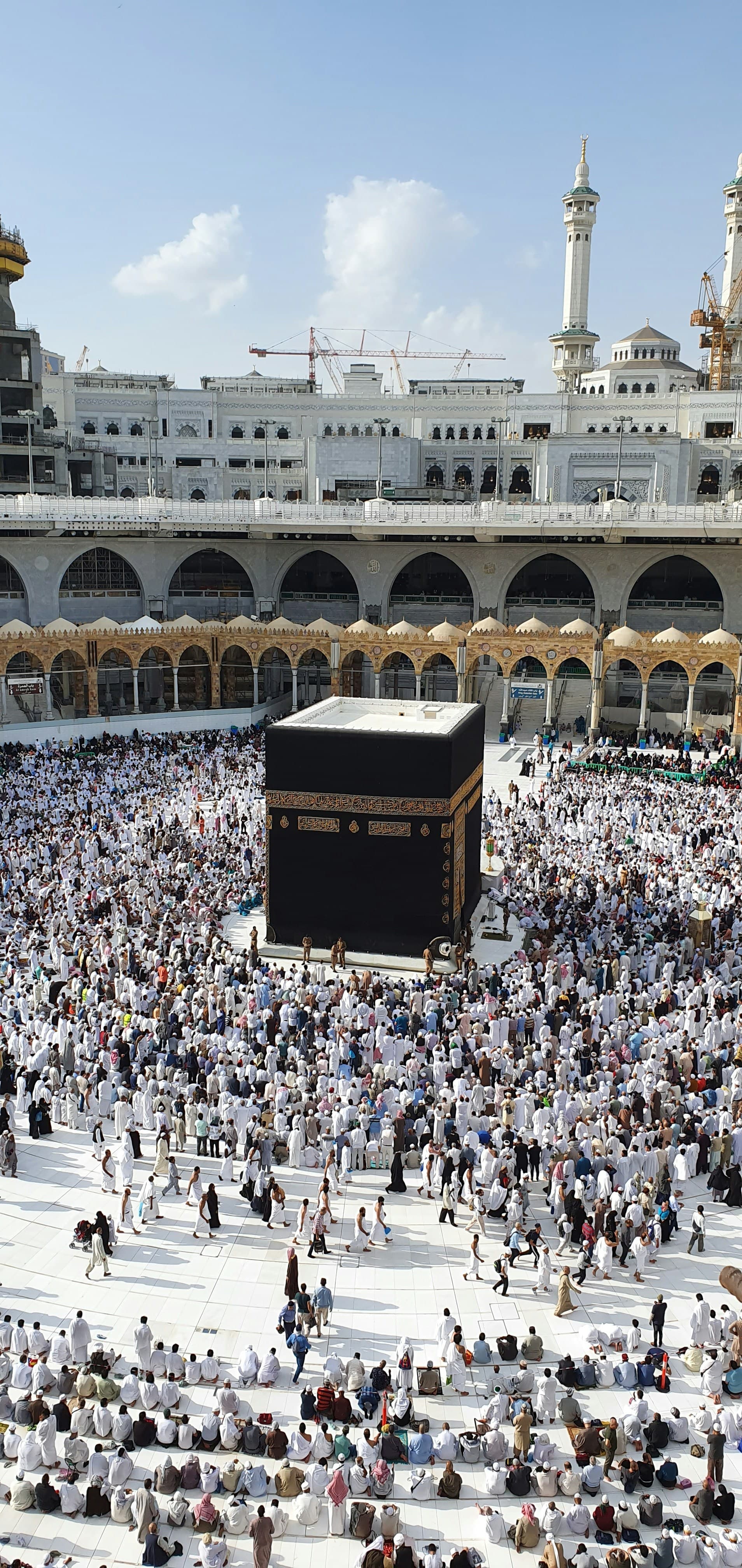
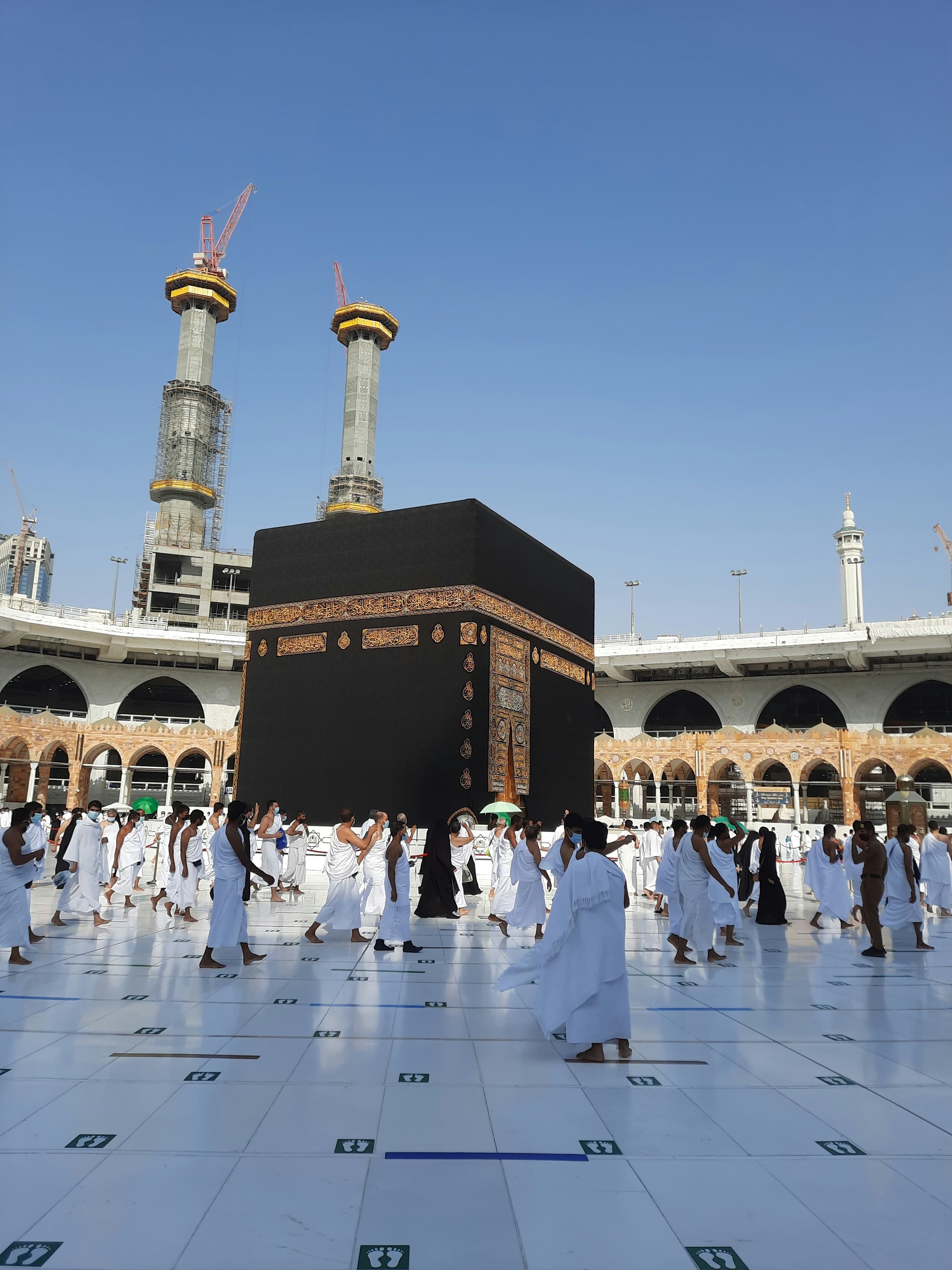
When you reach Makkah, settle in at your hotel, make wudu and go to Masjid al-Haram. Enter with your right foot and say the dua for entering a masjid. You need wudu for Tawaf, so if you lose it during the rounds, renew it and continue from where you stopped.
Entering the masjid
بِسْمِ اللَّهِ، وَالصَّلَاةُ وَالسَّلَامُ عَلَى رَسُولِ اللَّهِ، اللَّهُمَّ افْتَحْ لِي أَبْوَابَ رَحْمَتِكَ
Bismillah, was-salatu was-salamu ‘ala Rasulillah. Allahumma-ftah li abwaba rahmatik.
Uncover your right shoulder (men)
Men pass the upper sheet under the right arm and over the left shoulder (idtiba). This is only for the Tawaf of Umrah; cover the shoulder again when the seven rounds are done.
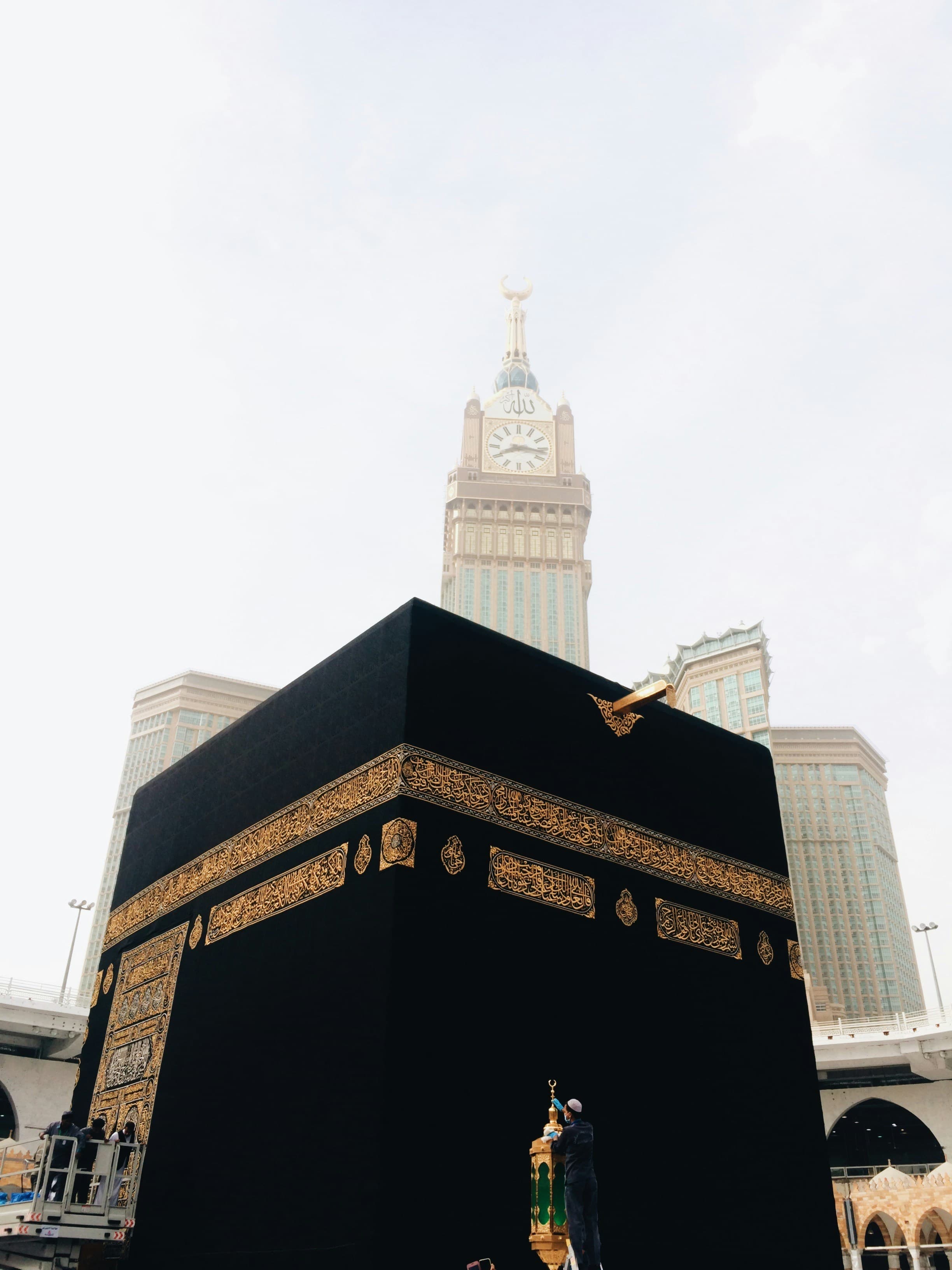
Start at the Black Stone
Stand in line with the Hajar al-Aswad — a green light on the wall of the masjid opposite it marks the line. Stop the Talbiyah. Face the stone, raise your right hand towards it and say “Bismillah, Allahu Akbar”. Kissing or touching it is sunnah, but in the crowds pointing towards it is enough.
Walk seven rounds, anticlockwise
Keep the Kaaba on your left. Each round runs from the Black Stone back to the Black Stone. Walk outside the curved wall of Hijr Ismail: it is part of the Kaaba, so a round that passes inside it doesn't count.
Walk briskly in the first three rounds (men)
If there is room, men walk the first three rounds with short, quick steps (raml), then walk normally for the last four. Don't push through the crowd to do it.
At the Yemeni Corner
Touch the Rukn al-Yamani with your right hand if you can easily reach it. Don't kiss it, and don't point at it from a distance. Between this corner and the Black Stone, recite “Rabbana atina…” (below).
Pray two rak‘ahs
After the seventh round, cover your shoulder and pray two rak‘ahs behind Maqam Ibrahim if there is space, or anywhere else in the masjid. It is sunnah to recite Surah al-Kafirun in the first and Surah al-Ikhlas in the second.
Drink Zamzam
Drink Zamzam water, which is available all around the masjid, and make dua. Many pilgrims also make dua at the Multazam, the wall between the Black Stone and the door, if they can reach it.
Between the Yemeni Corner and the Black Stone
رَبَّنَا آتِنَا فِي الدُّنْيَا حَسَنَةً وَفِي الْآخِرَةِ حَسَنَةً وَقِنَا عَذَابَ النَّارِ
Rabbana atina fid-dunya hasanatan wa fil-akhirati hasanatan wa qina ‘adhaban-nar.
Step 3: Sa'i between Safa and Marwa
Sa'i remembers Hajar, the mother of Isma‘il, running between the two hills searching for water. Today the hills are inside the masjid, joined by a long air-conditioned gallery. Each lap is about 450 metres, so the seven laps come to roughly three kilometres. Wudu is recommended for Sa'i but not required.
Climb Safa
As you approach Safa at the start of the first lap, recite the verse below and say “Abda'u bima bada'Allahu bih” — “I begin with what Allah began with.”
Face the Kaaba and make dua
On Safa, turn towards the Kaaba, raise your hands and say “Allahu Akbar” three times, then the dhikr below, and make your own dua.
Walk to Marwa — that is lap one
Men walk briskly between the two green lights on the walls and ceiling; women walk at a normal pace throughout. On Marwa, face the Kaaba and repeat the dhikr and dua.
Marwa back to Safa — lap two
Continue the same way. Your odd laps finish at Marwa and your even laps at Safa.
Finish at Marwa
The seventh lap ends at Marwa. There is no prayer after Sa'i.
Approaching Safa
إِنَّ الصَّفَا وَالْمَرْوَةَ مِنْ شَعَائِرِ اللَّهِ — أَبْدَأُ بِمَا بَدَأَ اللَّهُ بِهِ
Innas-Safa wal-Marwata min sha‘a'irillah. Abda'u bima bada'Allahu bih.
On Safa and Marwa
لَا إِلَهَ إِلَّا اللَّهُ وَحْدَهُ لَا شَرِيكَ لَهُ، لَهُ الْمُلْكُ وَلَهُ الْحَمْدُ وَهُوَ عَلَى كُلِّ شَيْءٍ قَدِيرٌ، لَا إِلَهَ إِلَّا اللَّهُ وَحْدَهُ، أَنْجَزَ وَعْدَهُ، وَنَصَرَ عَبْدَهُ، وَهَزَمَ الْأَحْزَابَ وَحْدَهُ
La ilaha illallahu wahdahu la sharika lah, lahul-mulku wa lahul-hamdu wa huwa ‘ala kulli shay'in qadir. La ilaha illallahu wahdah, anjaza wa‘dah, wa nasara ‘abdah, wa hazamal-ahzaba wahdah.
Step 4: Halq or Taqsir — cut your hair
The last rite is cutting the hair, which ends your Ihram. Men either shave the whole head (halq), which is better, or shorten the hair evenly from all over the head (taqsir) — a few snips from one side isn't enough. Women gather their hair and cut about a fingertip's length (around 2–3 cm) from the end, in private.
There are barbers just outside the masjid near Marwa. Once your hair is cut, everything that was forbidden in Ihram is allowed again, and your Umrah is complete. Alhamdulillah.
After Umrah: Madinah and Ziyarat
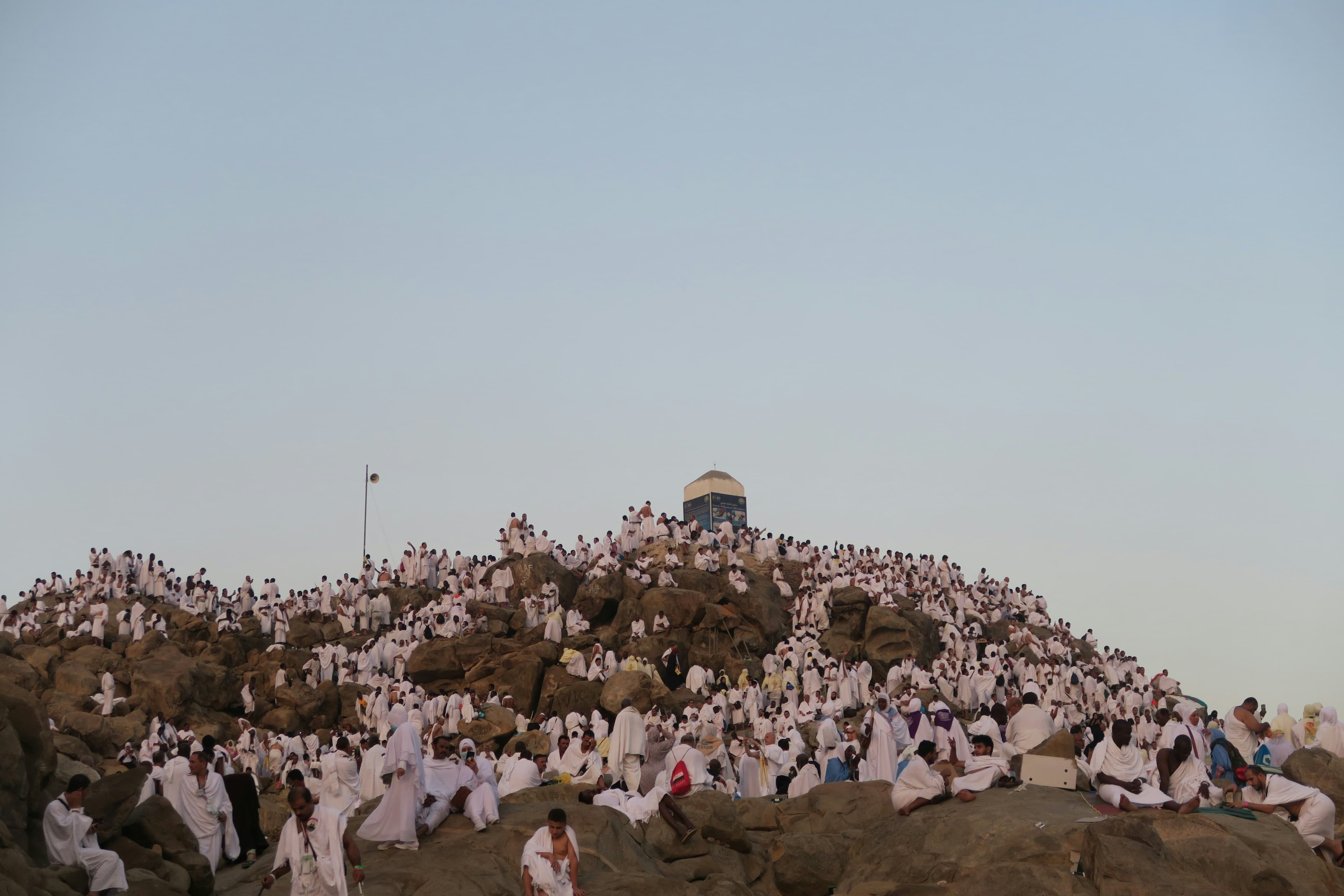
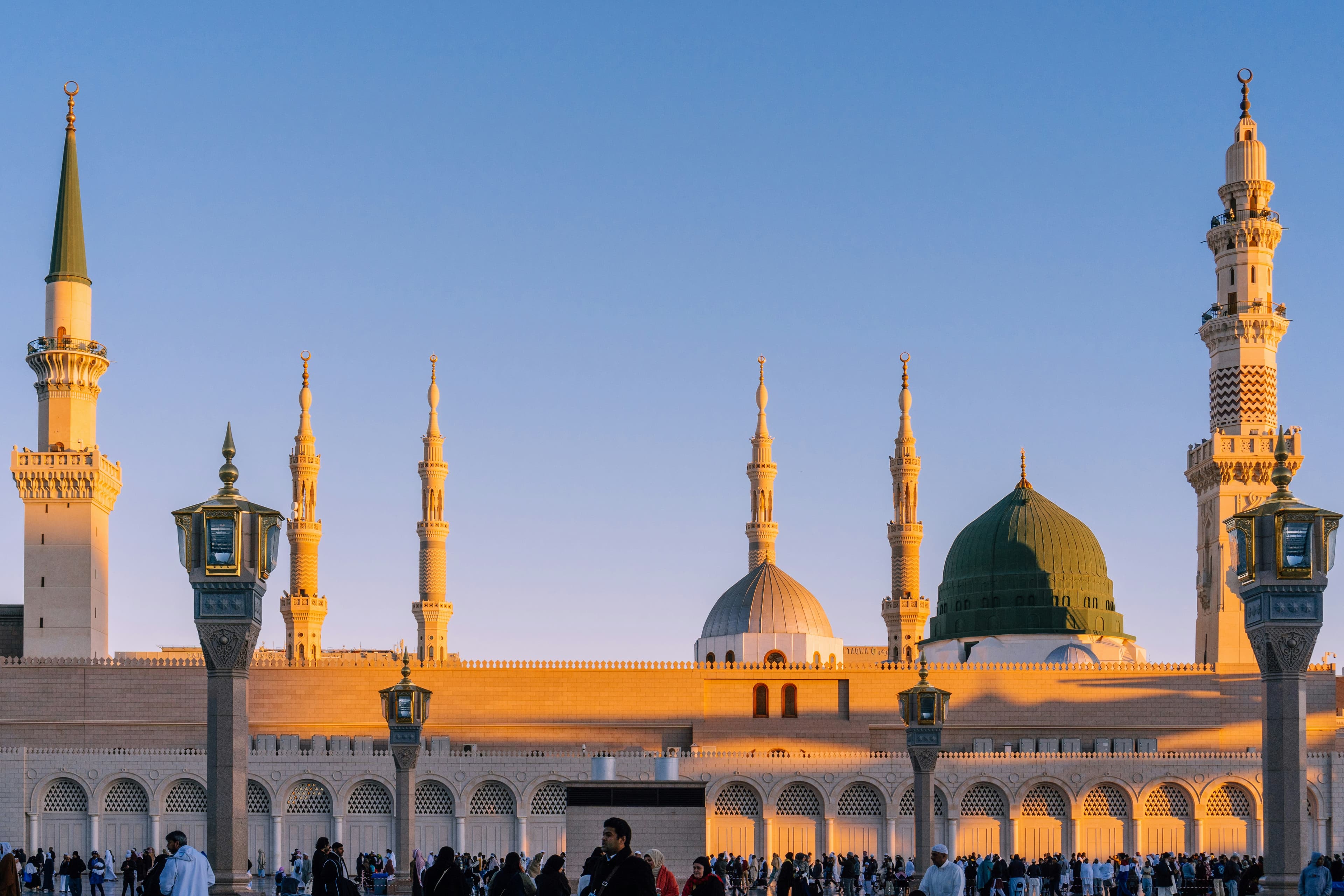
Visiting Madinah is not part of Umrah, but almost every group spends a few days there. Pray in Masjid an-Nabawi, send salam to the Prophet ﷺ, and book your time in the Rawdah through the Nusuk app — slots go quickly, so book as soon as your dates are confirmed. Most packages also include a Ziyarat tour of Makkah and Madinah: Jabal al-Nour, Arafat, Masjid Quba, Uhud and Masjid al-Qiblatayn. Here is what an Umrah package usually includes.
Common mistakes to avoid
- Landing in Jeddah without Ihram when going straight to Makkah — the Miqat is crossed in the air.
- Walking through Hijr Ismail during Tawaf, which makes that round incomplete.
- Starting the Tawaf away from the Black Stone line, or counting a part-round as a full one.
- Kissing or pointing at the Yemeni Corner — it is only touched, if you can reach it.
- Starting Sa'i at Marwa, or counting Safa to Marwa and back as a single lap.
- Cutting only a few hairs from one side of the head instead of shortening it evenly.
- Pushing or hurting others to reach the Black Stone. Kissing it is sunnah; not harming people is an obligation.